
BackupPC is a very capable open-source enterprise-grade backup system that is readily available for most Linux distributions, e.g., Ubuntu, Debian and Fedora. However, since most computers today are behind a NAT router or firewall, this completely breaks the ping command that a remote BackupPC server uses to check if a host client is alive or reachable. The most common solutions which allow BackupPC to ping host clients that are behind a NAT router or firewall are discussed here.
 BackupPC, being open source and free, is great in many aspects and thus has also become the backup system of choice in many enterprise environments as well as home networks. Although it usually works out-of-the box in most popular Linux distributions, such as Ubuntu, Debian and Fedora, some quirks do exist. For example, the broken GUI interface caused by Apache. Another example, which is discussed here, is the ping system that BackupPC uses to check if a host computer client is alive. In addition, it will be argued why some common solutions provided on the internet are better than others based on experience and logic.
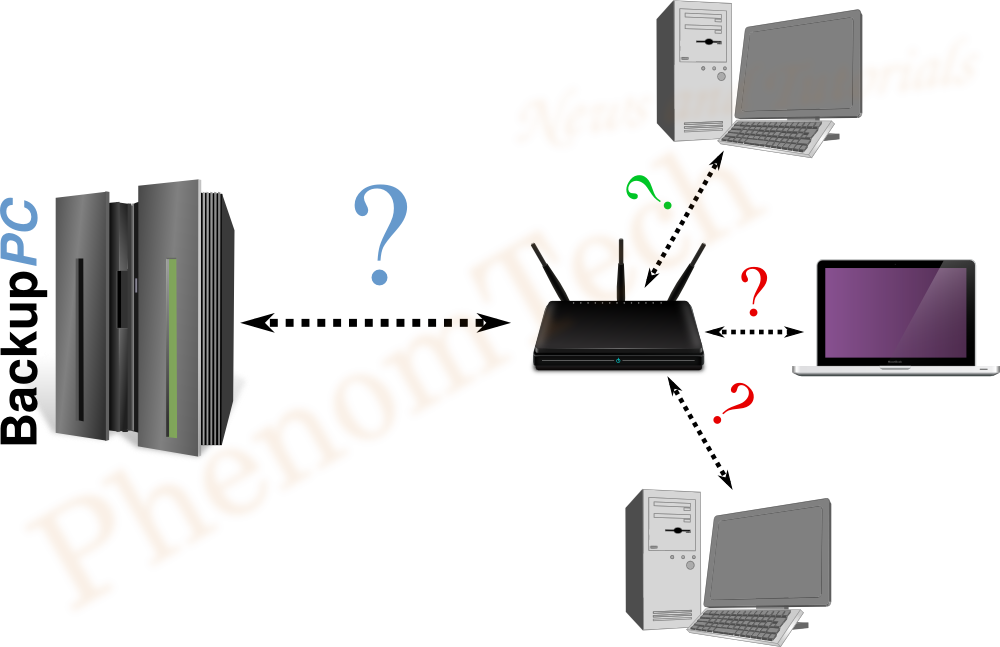
The scenario that is particularly considered is the case of a remote BackupPC server attempting to backup multiple computers that sit behind a NAT router with firewall, as illustrated in the picture above.


